The build-an-MCP-server and deploy chapters of any agent series eventually say “add OAuth 2.1,” and a lot of developers nod and quietly hope the boilerplate works. Tokens, scopes, grants, authorization servers — it reads like a security exam. This OAuth 2.1 primer cuts it down to the few ideas you actually need to follow that code and trust it.
You won’t implement an authorization server from scratch — libraries do that. What you need is the shape: who asks whom for what, what a token is, and what a scope limits. Get that, and securing an agent’s tools stops being a black box.
- You know what an HTTP request and a header are — new to that? Read the HTTP and bearer tokens primer first
- That’s it — this primer assumes no security background
- OAuth 2.1 lets an app get limited access to an API without ever seeing a password — it trades credentials for a token.
- An access token is a short-lived pass; the app sends it as a Bearer token on every request.
- A scope limits what a token can do (read vs write), so a leaked token can’t do everything.
- 2.1 consolidates 2.0 + best practices — requires PKCE, drops the insecure flows; agents and MCP servers use it to protect tools.
What OAuth 2.1 is for#
OAuth solves one specific problem: letting an app use an API on your behalf without handing it your password. Instead of sharing a secret, the app obtains a token — a temporary, limited credential — and uses that. The password is never exposed, and access can be scoped and revoked, which a shared password can’t (oauth.net).
OAuth 2.1 isn’t a brand-new protocol. It’s OAuth 2.0 plus a decade of hard-won security practice folded into one document — PKCE required, the insecure flows removed, redirect rules tightened (OAuth 2.1). So when a 2026 tutorial says “OAuth 2.1,” it means “modern, safe OAuth.” Learn this and you’ve learned the current default.
The cast: client, server, authorization server#
OAuth has three roles, and naming them once makes every flow readable.
- The client — your app (or an AI agent) that wants to call an API.
- The resource server — the API holding the protected data or tools.
- The authorization server — the gatekeeper that checks identity and issues tokens.
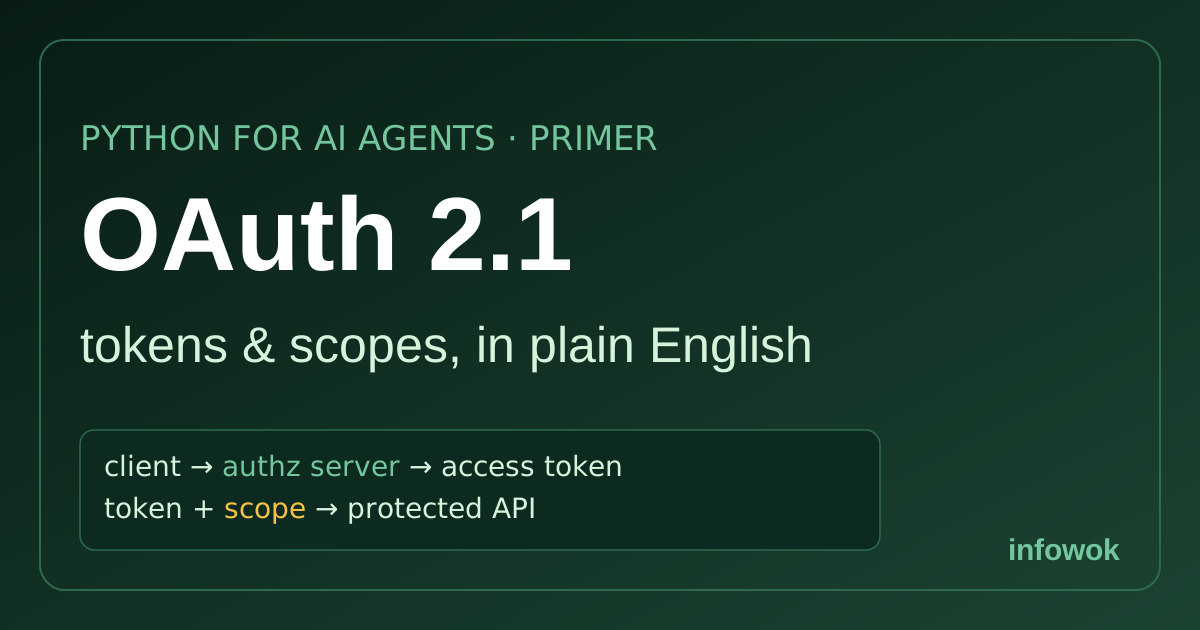
The dance, stripped to its essence: the client asks the authorization server for permission, gets back an access token, and presents that token to the resource server on each request. The resource server never handles a password — it only validates tokens. That separation is the whole design.
The client gets a token from the authorization server, then sends that token to the API. The API trusts the token, not the user’s password.
Access tokens and scopes#
The access token is the moving part you’ll see most. It’s a short-lived string the client sends — almost always as a Bearer token in the Authorization header — to prove it’s allowed. Short-lived matters: if it leaks, it expires soon, limiting the damage (RFC 6750).
A scope is the other half. It narrows what a token can do — read versus write, or access to one resource and not another. You request the least scope you need, so a compromised token can’t do everything (scopes). A read-only agent gets a read-only token; the one tool that deletes data needs a stricter scope. That principle of least privilege is most of what makes OAuth secure rather than just present.
Two habits prevent most token incidents: grant the narrowest scope a client actually needs, and keep tokens short-lived with refresh rather than long-lived and forever-valid. A broad, never-expiring token is a password that leaked in slow motion.
Why agents and MCP servers lean on OAuth#
Here’s where it lands for agent work. An agent’s tools are real APIs — a database, a filesystem, an internal service — and they must not be open to anyone who finds the URL. OAuth issues scoped, expiring tokens so an agent gets exactly the access it needs and the server validates every request before running a tool.
That’s precisely what a production MCP server does: an OAuth 2.1 gate validates a token on each call, and per-tool scopes mean a single leaked token can’t touch everything. The MCP client is the other side — it carries the token so the agent is allowed in. Read OAuth as “scoped, expiring passes issued by a gatekeeper,” and both halves stop being mysterious.
Quick recap#
The whole primer, in five lines:
- OAuth 2.1 lets an app access an API without seeing the password — it uses a token.
- Three roles: client (your app), resource server (the API), authorization server (issues tokens).
- An access token is a short-lived Bearer credential sent on each request.
- A scope limits what the token can do — request the least you need.
- Agents and MCP servers use it to protect tools with scoped, expiring access.
Frequently Asked Questions#
What is OAuth 2.1? A standard for an app to get limited, time-bound API access without seeing a password — it requests a token from an authorization server and sends it with each request.
Access token vs scope? The token is the short-lived pass the app sends; the scope limits what that token can do (read vs write).
2.1 vs 2.0? 2.1 consolidates 2.0 plus best practices — PKCE required, insecure flows removed. It’s modern OAuth.
Why do agents use it? Their tools are real APIs; OAuth issues scoped, expiring tokens so the server can authorise each call.
Conclusion#
OAuth 2.1 is just a way to swap a password for a scoped, expiring token: a gatekeeper issues it, the API trusts it, and the scope keeps it from doing too much. Read the three roles and the token-and-scope idea, and the “add OAuth” step in any MCP or deploy guide turns from a security exam into a pattern you can follow — and, more importantly, trust.
What would you scope tightest in an agent — database writes, money movement, email sending? Tell me in the comments.
- Need the HTTP basics? The HTTP and bearer tokens primer covers headers and tokens.
- See it enforced: build a production MCP server puts an OAuth 2.1 gate in front of tools.
- The client side: the MCP client tutorial carries the token so the agent gets in.